← Back to Blog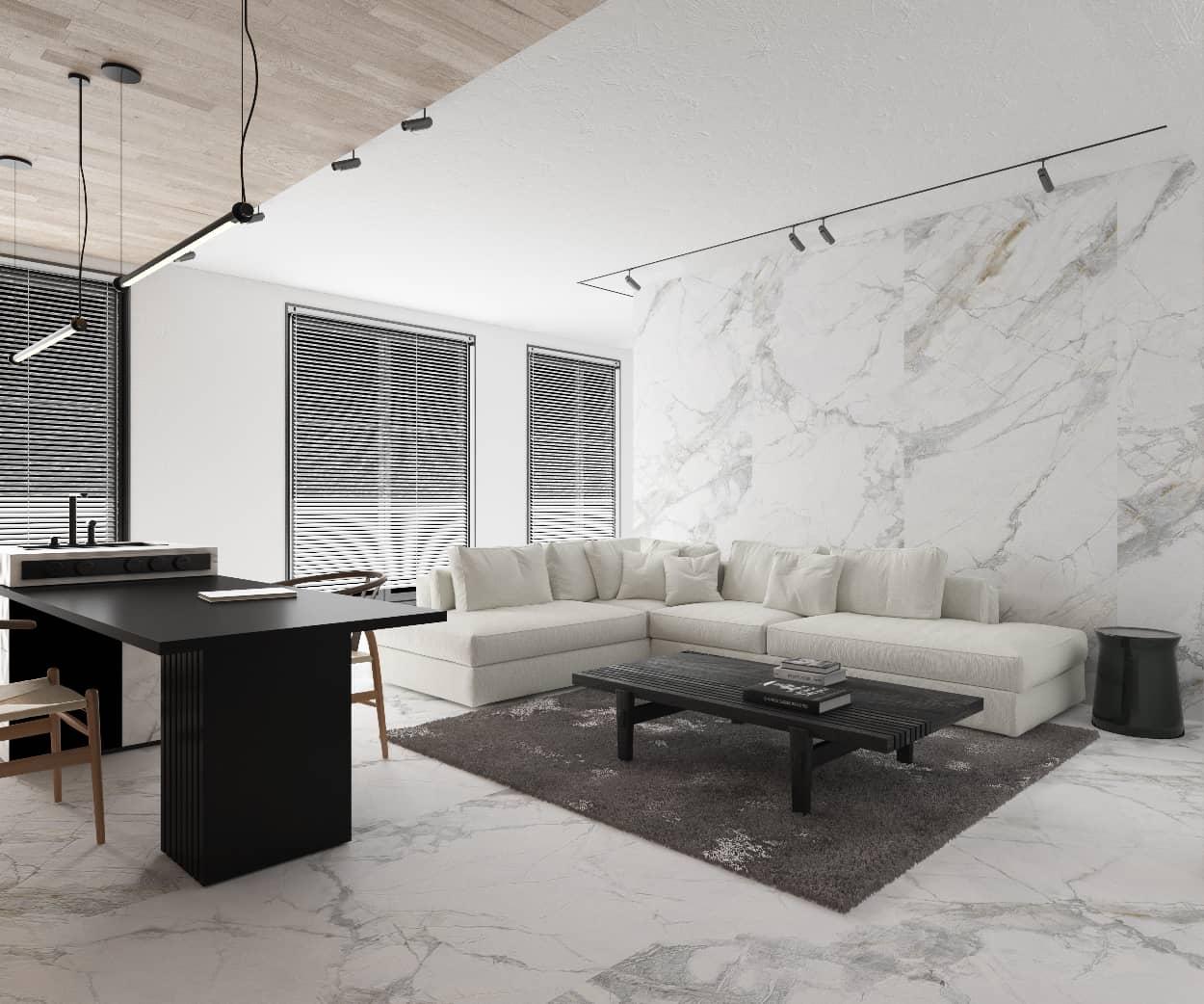
Unlike engineered quartz, sintered stone is generally produced without a high proportion of resin. Unlike natural marble or granite, it is manufactured to controlled specifications and is available in large formats, thin profiles and a wide range of finishes.
Bathroom surfacesLow porosity makes it useful for vanity tops, shower walls and wall cladding. Proper waterproofing and joint treatment remain essential.
Walls, floors and façadesLarge slabs reduce grout lines in lobbies, retail spaces and homes. Exterior use depends on the slab system, fixing method and local engineering requirements.
Furniture and commercial interiorsThin slabs can be applied to tables, cabinets, reception desks and display fixtures when supported by a compatible structure.
Can it be used outdoors?Many products can be used outdoors, but suitability depends on UV rating, climate, thickness and installation system.
Is it completely scratch-proof?No surface is indestructible. Sintered stone resists everyday abrasion, but sharp tools, heavy impacts and improper handling can still cause damage.
Product Guides
What Is Sintered Stone? Advantages, Disadvantages and Main Uses
A practical guide to how sintered stone is made, its key benefits and limitations, and where large-format slabs work best in kitchens, bathrooms, walls, furniture and commercial projects.
WHAT IS SINTERED STONE?
Sintered stone is a high-performance architectural surface made from natural mineral powders compacted under very high pressure and fired at high temperature. This process creates a dense, low-porosity slab with consistent colour, pattern and technical performance.Unlike engineered quartz, sintered stone is generally produced without a high proportion of resin. Unlike natural marble or granite, it is manufactured to controlled specifications and is available in large formats, thin profiles and a wide range of finishes.
HOW IS SINTERED STONE MADE?
Selected minerals are refined and blended, pressed into large slabs, decorated where required, then fired in an industrial kiln. Each manufacturer uses its own formulation and production parameters, so buyers should compare technical data rather than assume every slab performs identically.MAIN ADVANTAGES
- Low water absorption: suitable for kitchens, bathrooms and many commercial interiors.
- Heat resistance: performs well around cooking and fireplace applications when correctly installed.
- Resistance to stains and household chemicals: routine cleaning is generally simple.
- UV stability: many products retain their appearance in sun-exposed applications; confirm the exact rating.
- Large formats: fewer joints create a continuous effect on walls, worktops and furniture.
- Design flexibility: stone, concrete, metal and solid-colour looks are available in many finishes and thicknesses.
LIMITATIONS TO CONSIDER
- Edges can chip, so transport, cutting and installation require suitable equipment and trained fabricators.
- Large thin slabs need a flat, stable substrate and the correct adhesive system.
- Severe impact damage can be difficult to repair and may require replacing a section.
- The slab price is only part of the budget; include fabrication, reinforcement, packing and installation.
- Book-matched patterns, available faces and batch consistency should be confirmed before ordering.
MAIN APPLICATIONS
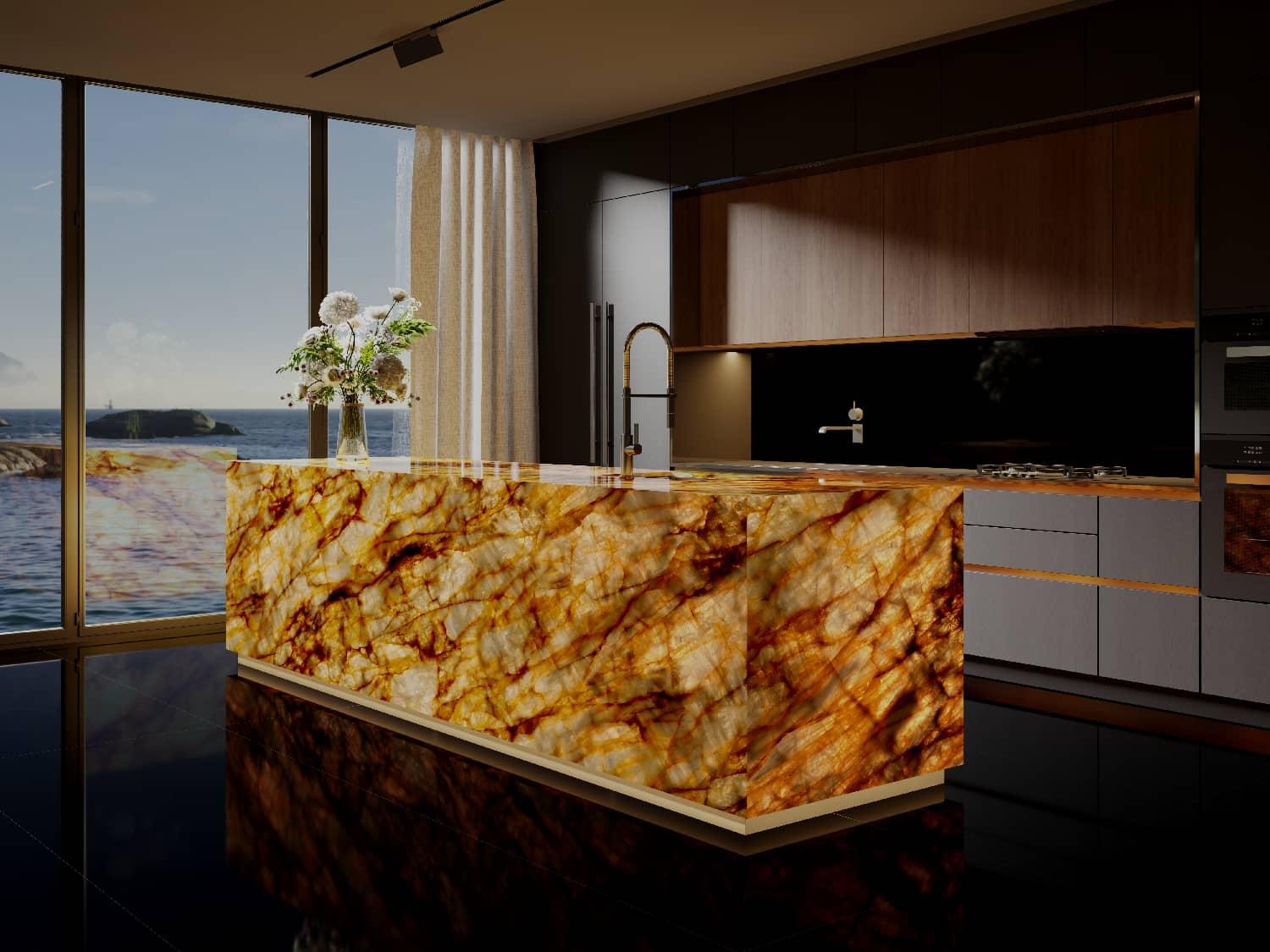
Kitchen countertops and islandsSintered stone is widely used for worktops, backsplashes and waterfall islands because it combines a refined appearance with easy daily maintenance. Cut-outs, overhangs and edge details must follow fabrication guidance.Bathroom surfacesLow porosity makes it useful for vanity tops, shower walls and wall cladding. Proper waterproofing and joint treatment remain essential.
Walls, floors and façadesLarge slabs reduce grout lines in lobbies, retail spaces and homes. Exterior use depends on the slab system, fixing method and local engineering requirements.
Furniture and commercial interiorsThin slabs can be applied to tables, cabinets, reception desks and display fixtures when supported by a compatible structure.
HOW TO CHOOSE THE RIGHT SLAB
Define the application first, then compare size, thickness, finish, water absorption, breaking strength, slip resistance and UV performance. Ask for current samples, technical documents, packing details and fabrication recommendations. Wholesale and project buyers should also confirm minimum order quantity, mixed-container options, lead time and shade control.FREQUENTLY ASKED QUESTIONS
Is sintered stone the same as porcelain?They use related ceramic technologies, but formats, formulations and declared performance vary. Evaluate the actual technical sheet and intended application.Can it be used outdoors?Many products can be used outdoors, but suitability depends on UV rating, climate, thickness and installation system.
Is it completely scratch-proof?No surface is indestructible. Sintered stone resists everyday abrasion, but sharp tools, heavy impacts and improper handling can still cause damage.
CONCLUSION
Sintered stone combines large-format design freedom with low porosity, heat resistance and straightforward maintenance. Its best performance depends on choosing the right specification and experienced fabrication. Contact SinoSlab at info@sinoslab.com to request samples, technical information or a wholesale quotation.